
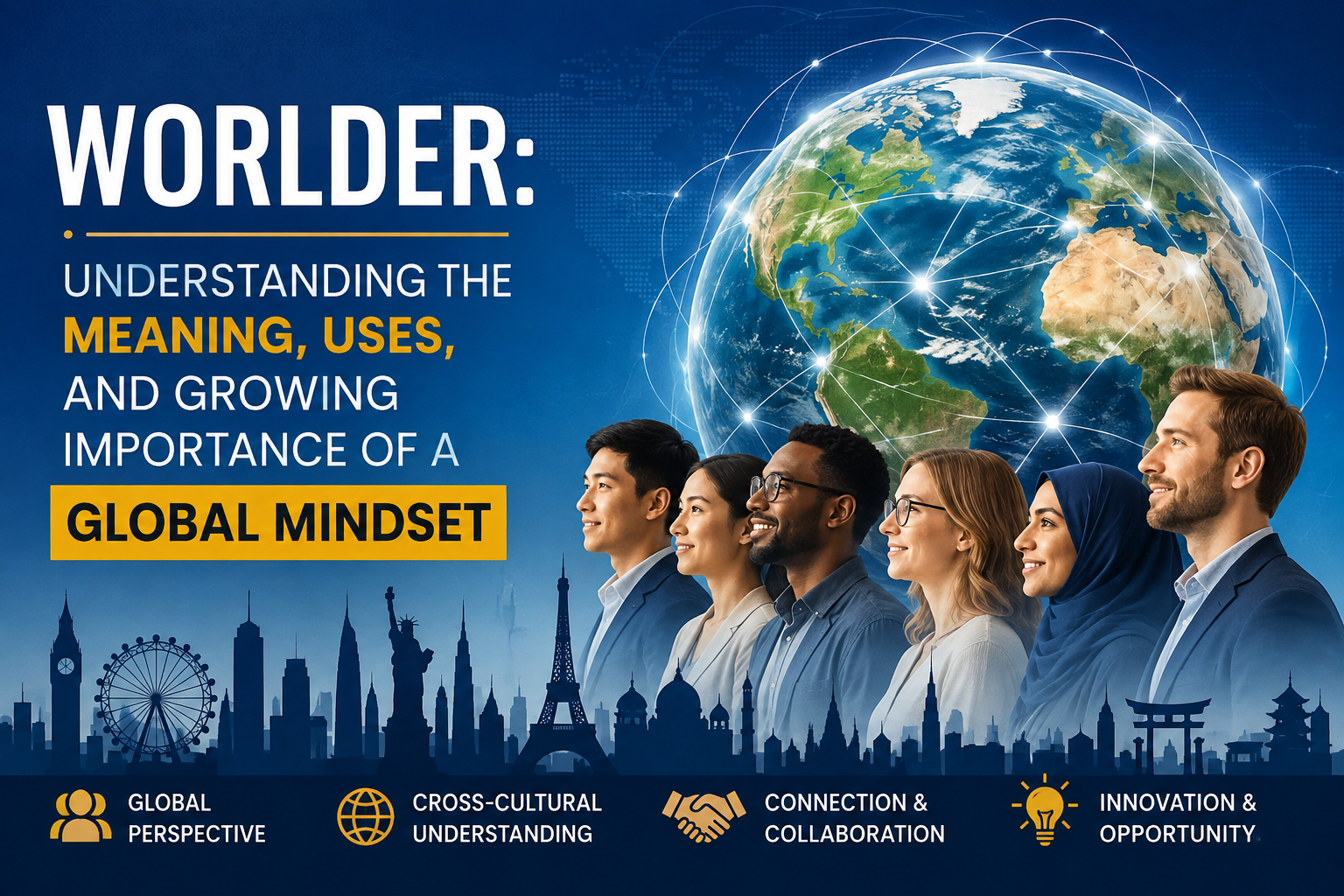
The word worlder may sound simple, but it can represent a much bigger idea. In a connected world, people are no longer limited to their own cities, countries, cultures, or communities. Technology, travel, education, business, entertainment, and social media have made it easier than ever to learn about places and people far away. A worlder can be understood as someone who looks beyond local boundaries and takes interest in the wider world.
Being a worlder isn’t only about traveling to many countries. It can also mean having curiosity about different cultures, understanding global events, communicating with people from different backgrounds, and being open to new ideas. In many ways, the concept connects with the modern idea of being a global citizen.
Today, this mindset is becoming more valuable. A student may study with classmates from different countries. A business owner may sell products to customers around the world. A writer may reach readers on several continents. Even a person who rarely travels can explore global cultures through books, films, online courses, news, and digital communities.
This article explores the meaning of worlder, its possible uses, the qualities associated with it, and why a global outlook can be useful in modern life.
What Does Worlder Mean?
Worlder isn’t a single technical term with one universal definition. Its meaning can depend on the context in which it’s used. In general, it can describe a person who thinks about the world as a broad and connected place rather than focusing only on one local environment.
The term can be connected with ideas such as global awareness, international curiosity, cultural understanding, and worldwide communication. A worlder may be interested in what happens beyond their own borders and may enjoy discovering how other communities live, work, learn, celebrate, and solve problems.
For example, imagine a young person who enjoys learning languages, reading about international history, following global news, and speaking with people from other countries. That person could reasonably be described as a worlder because their interests extend beyond one culture or location.
The term can also be used creatively. In blogs, websites, communities, travel projects, or brand names, worlder may suggest someone who belongs to or understands a wider global community.
Worlder and the Idea of Global Citizenship
The concept of worlder has a close connection with global citizenship. A global citizen understands that actions in one part of the world can sometimes affect people somewhere else.
Climate change is a clear example. Pollution released in one country doesn’t necessarily stay within that country’s borders. Similarly, international trade, technology, migration, education, and public health can connect people across continents.
A worlder mindset encourages people to think about these connections. It doesn’t mean ignoring one’s own community. Instead, it means understanding that local and global responsibilities can exist together.
A person with a global outlook may ask questions such as:
- How does this issue affect people in other countries?
- What can I learn from another culture?
- Why do communities have different traditions?
- How are international businesses connected?
- What can people from different backgrounds teach one another?
- How can technology bring people closer together?
These questions encourage curiosity instead of fear. And, frankly, curiosity is one of the strongest tools for learning.
Why Worlder Is Relevant in the Modern World
The world has become highly connected through digital communication. A message can travel across the planet in seconds. A business can promote its services to customers in another country without opening a physical office there. Students can access educational resources from universities and organizations around the world.
This connection makes a global mindset increasingly useful.
Consider the workplace. Many companies now work with international clients, suppliers, employees, and partners. Workers may need to understand different communication styles and cultural expectations. Someone who can communicate respectfully with people from various backgrounds may have an advantage.
Education is also changing. Students can join international competitions, online learning communities, language programs, and cultural exchanges. They can learn about subjects from perspectives that aren’t always available in their local environment.
Entertainment has become global, too. Music, movies, television programs, sports, books, and online creators can gain audiences across borders. As a result, people are exposed to ideas and traditions from places they may never physically visit.
In this environment, the worlder concept reflects an important reality: our world is connected, and understanding that connection can create opportunities.
Key Qualities of a Worlder
Being a worlder isn’t about having a passport full of stamps. It’s more about attitude, knowledge, and behavior.
Some qualities commonly associated with a worlder include:
Curiosity
A worlder wants to know how other people live and why different cultures have different customs. Curiosity makes learning exciting rather than stressful.
Open-Mindedness
An open-minded person doesn’t automatically reject something simply because it’s unfamiliar. They take time to understand it before forming an opinion.
Cultural Respect
Respect is essential when learning about another culture. A worlder understands that traditions may have deep historical and social meaning.
Adaptability
The world changes quickly. People who can adjust to new environments, technologies, ideas, and communication styles may find it easier to succeed.
Communication Skills
International communication requires more than knowing vocabulary. It also involves listening carefully, avoiding unnecessary assumptions, and understanding context.
Global Awareness
A worlder pays attention to major events and trends that can influence people across different regions.
Empathy
Empathy allows people to understand experiences that may be different from their own. It can help reduce stereotypes and encourage better relationships.
Worlder in Travel and Exploration
Travel is one of the most obvious ways to develop a worlder mindset. Visiting another country can introduce a person to new languages, foods, landscapes, traditions, architecture, and lifestyles.
However, travel isn’t simply about taking photographs at famous attractions. Meaningful travel often involves observing how local people live and learning why a place is important to them.
A thoughtful traveler may visit:
- Historical locations
- Museums and cultural centers
- Local markets
- Libraries
- Traditional neighborhoods
- Natural landmarks
- Community events
- Local restaurants
- Art and craft centers
Travelers should also respect local rules and customs. A behavior that’s considered normal in one place may be inappropriate somewhere else. Learning a few words of the local language can also make communication more pleasant.
And here’s the good news: you don’t have to travel far to start developing a global perspective. Reading about other countries, watching educational documentaries, joining international online communities, and learning another language can provide valuable experiences from home.
Worlder and Cultural Understanding
Culture influences how people communicate, eat, celebrate, dress, work, and understand family and community. It can also influence ideas about time, personal space, education, leadership, and social behavior.
A worlder tries to understand these differences without immediately judging them.
For example, greetings vary greatly across cultures. Some people prefer handshakes, while others use bows, verbal greetings, or other traditional gestures. Food customs also vary widely. A dish that is common in one region may be unfamiliar in another.
Understanding these differences can prevent confusion.
Cultural awareness is especially important in international workplaces. A manager working with a global team should recognize that employees may have different communication preferences. Some may speak directly, while others may use more indirect language to remain polite.
Rather than treating one style as automatically correct, a culturally aware person tries to understand the situation.
That’s what makes the worlder concept valuable: difference becomes an opportunity to learn rather than a reason to divide people.
Worlder in Education and Learning
Education can play a major role in developing a worlder mindset. Schools and universities can help students understand international history, geography, economics, science, literature, and social issues.
Learning another language is particularly helpful. Language isn’t only a communication tool. It can provide insight into how another community thinks and expresses ideas.
Students can build global knowledge through:
- Reading books by international authors
- Studying world history
- Learning foreign languages
- Following reliable international news
- Joining cultural exchange programs
- Participating in online international communities
- Watching educational content from different countries
- Studying global environmental issues
- Exploring international art and literature
Digital education has made many of these activities easier. Someone living in a small town can now access resources created by educators and institutions thousands of miles away.
Of course, online information should be checked carefully. Not everything posted on the internet is accurate. A responsible worlder compares information, checks reliable sources, and avoids sharing unverified claims.
Worlder in Business and Careers
The business world is increasingly international. Products can be designed in one country, manufactured in another, marketed globally, and purchased by customers from many regions.
This creates opportunities for people who understand international markets.
A worlder working in business may pay attention to:
| Area | Why It Matters |
|---|---|
| Communication | Helps teams and clients understand each other |
| Culture | Reduces misunderstandings and builds trust |
| Languages | Makes international communication easier |
| Technology | Connects businesses across borders |
| Research | Helps companies understand new markets |
| Customer needs | Different regions may have different expectations |
| Global trends | International changes can influence local markets |
| Professional etiquette | Customs vary between countries |
Entrepreneurs can especially benefit from global thinking. The internet allows small businesses to reach audiences that were once difficult to access.
For example, a designer can sell digital services internationally. A writer can work with overseas clients. An online educator can teach students in multiple countries. A software developer can join a remote team with members from different continents.
The possibilities are broad.
However, global business requires responsibility. Businesses must understand local laws, payment systems, customer expectations, language differences, and cultural standards before entering a new market.
Worlder and Technology
Technology is one of the biggest forces behind today’s global connections. Smartphones, video calls, social networks, translation tools, online marketplaces, and cloud services allow people to communicate across borders with remarkable speed.
A person can attend an online meeting with people from several countries without leaving home. They can learn a language using an app, watch a lecture from another country, or collaborate on a project with an international team.
Artificial intelligence and translation technology are also helping reduce some communication barriers. However, technology isn’t a perfect replacement for human understanding.
Automated translation can miss humor, cultural references, emotion, and context. A good worlder therefore uses technology as a helpful tool while continuing to develop real communication skills.
Technology should bring people together, not encourage people to live inside isolated information bubbles.
How to Develop a Worlder Mindset
Developing a global mindset doesn’t require a dramatic lifestyle change. Small habits can make a meaningful difference.
Read Beyond Your Local Environment
Choose books, articles, and essays written by people from different countries. This can introduce new experiences and viewpoints.
Learn Another Language
Even basic knowledge of another language can increase cultural understanding. Don’t worry about becoming fluent immediately. Start with simple phrases and everyday expressions.
Explore International Food
Food can be a fun introduction to culture. Learn about the history behind dishes rather than simply trying something new.
Follow Reliable Global News
Learn about major international developments through trustworthy news organizations and official sources. Compare reports when an issue is complicated.
Meet Different People
If your community includes people from different backgrounds, talk to them respectfully. Ask questions and listen to their experiences.
Challenge Your Assumptions
Everyone develops assumptions based on personal experience. Occasionally asking, “Could there be another explanation?” can improve critical thinking.
Travel Responsibly
If you travel, learn about the destination before arriving. Understand local customs and respect the people who live there.
Learn From History
History explains why countries and communities developed differently. It can also show how past events continue to influence modern relationships.
These habits can gradually turn curiosity into knowledge.
Worlder and the Importance of Respect
Global awareness without respect can become shallow. Simply knowing facts about other countries isn’t enough.
A person may know the names of many countries but still misunderstand the people who live there. Genuine global awareness requires respect for human dignity and cultural differences.
Respect doesn’t mean agreeing with every idea or tradition. It means approaching differences thoughtfully instead of using stereotypes.
For example, when learning about a culture, it’s better to ask questions and use reliable information than to assume every person from that culture behaves in exactly the same way.
Cultures aren’t fixed objects. They change over time, just as languages, technology, fashion, and social habits change.
People within the same country can also have very different experiences.
This is an important lesson for every worlder: a country is not defined by one stereotype, and an individual should never be reduced to a label.
Challenges of Becoming a Worlder
A global mindset has many benefits, but it can also bring challenges.
One challenge is information overload. There are billions of online posts, videos, articles, and opinions. It can be difficult to determine which information is trustworthy.
Another challenge is cultural misunderstanding. Even with good intentions, people can accidentally say or do something inappropriate when they don’t understand local customs.
Language barriers can create difficulties, too. Translation tools help, but they don’t always communicate meaning perfectly.
There is also the risk of becoming overwhelmed by global problems. Climate change, conflict, poverty, economic instability, and humanitarian crises can make the world seem frightening.
The solution isn’t to ignore these issues. Instead, people can focus on learning, responsible action, and realistic hope.
A worlder doesn’t need to solve every global problem alone. Sometimes, making a small positive contribution to a community is already meaningful.
Worlder and the Future
The importance of global awareness is likely to increase as technology continues to connect people.
Future workplaces may contain even more international teams. Online education may reach larger audiences. Digital businesses may serve customers across borders. Cultural exchange may become a normal part of everyday life.
Young people, in particular, have opportunities to build international skills early. They can learn languages, develop digital skills, explore international subjects, and communicate with people from other regions.
At the same time, future generations will need strong critical-thinking skills. Global connectivity brings both useful information and misinformation.
Being connected doesn’t automatically mean being informed.
A responsible worlder should therefore combine curiosity with careful research. They should ask where information comes from, whether evidence supports it, and whether another trustworthy source confirms it.
The future belongs not only to people who know how to use technology but also to those who know how to use it wisely.
Worlder: Benefits of a Global Outlook
A worlder mindset can provide benefits in many areas of life.
Personal Growth
Learning about different cultures can make people more confident, curious, and adaptable.
Better Communication
Understanding cultural differences can make conversations with international friends, customers, and coworkers easier.
Career Opportunities
Global skills can be useful in business, technology, education, tourism, media, and many other industries.
Greater Empathy
Learning about different life experiences can help people understand challenges beyond their own environment.
Creative Thinking
Exposure to new ideas can inspire fresh solutions to problems.
Stronger Relationships
Respect and cultural awareness can help people form meaningful relationships with individuals from different backgrounds.
Better Decision-Making
Knowing about international trends can help people make more informed choices in education, business, and career planning.
These benefits show why global thinking is more than a trendy concept. It can become a practical life skill.
Common Misunderstandings About Worlder
Some people may believe that being a worlder means traveling constantly or speaking several languages. Those activities can help, but they’re not requirements.
Another misunderstanding is that a global mindset means forgetting local culture. That’s not true.
A person can deeply value their own traditions while being interested in other cultures. In fact, understanding one’s own background can make it easier to appreciate someone else’s.
Some may also think that global awareness requires expensive international travel. Again, that’s not necessary.
Books, documentaries, online courses, international communities, language learning, and conversations with people from different backgrounds can all provide global learning opportunities.
The key isn’t how far someone travels. It’s how willing they are to learn.
Worlder in Everyday Life
The worlder concept doesn’t need to remain an abstract idea. It can be practiced through simple everyday choices.
When watching a movie, try films from different countries. When reading, choose writers from different regions. When using social media, follow educational creators from outside your normal information circle.
When you meet someone from another culture, be curious without being intrusive. Listen before making assumptions.
When shopping, learn where products come from and how international supply chains work. When discussing global issues, check reliable information before sharing a claim.
These small actions can gradually build stronger global awareness.
Perhaps most importantly, remain willing to say, “I don’t know.”
That simple sentence can be the beginning of real learning.
Final Thoughts on Worlder
The idea of worlder reflects a modern way of looking at life. It represents curiosity, cultural understanding, global awareness, adaptability, and respect. In a world where people are increasingly connected, these qualities can help individuals communicate better and understand experiences beyond their own communities.
Being a worlder doesn’t require a passport, a large travel budget, or perfect knowledge of international affairs. It begins with curiosity. Read something from another culture. Learn a new phrase. Listen to another person’s experience. Explore a new idea. Check information before believing it.
Most importantly, keep an open mind while maintaining good judgment.
The world is enormous, diverse, and constantly changing. No one person can understand everything, and that’s perfectly okay. What matters is the willingness to keep learning.
In the end, worlder is more than a word. It can represent a positive approach to living in a connected world—one based on learning, respect, communication, and hope. By developing a worlder mindset, people can become better learners, stronger communicators, thoughtful professionals, and more understanding members of the global community.
Never miss a headline follow All News Here for fresh news, updates & insights every day.