
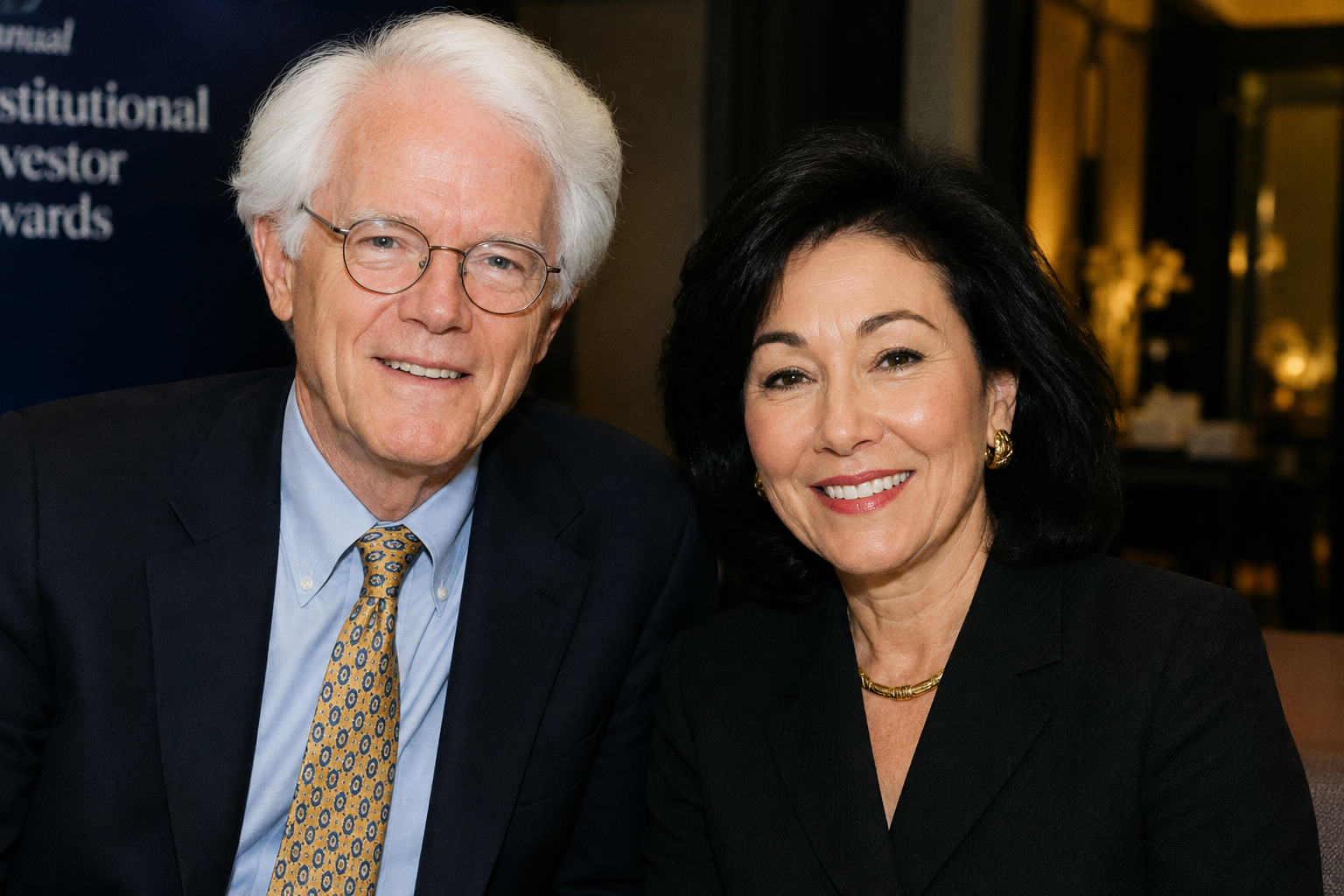
peter lynch and safra catz are two well-known names connected with major areas of American business and finance, but they built their reputations in very different ways. Peter Lynch became famous as a legendary mutual-fund manager and investor, while Safra Catz built a powerful career in investment banking, corporate leadership, mergers and acquisitions, and technology.
Although their careers aren’t the same, studying peter lynch and safra catz together provides an interesting look at two different approaches to business success. Lynch is widely remembered for his practical approach to investing and his long tenure managing Fidelity’s Magellan Fund. Catz, meanwhile, became one of the most influential executives at Oracle, where she held senior financial and leadership positions before becoming CEO and later executive vice chair of the board.
This article explores their backgrounds, careers, leadership styles, achievements, financial thinking, and lasting influence. It also explains an important point: there is no well-established public evidence that Lynch and Catz worked together as business partners or had a major professional relationship. Their connection is mainly interesting because both demonstrate how financial knowledge, disciplined decision-making, and long-term thinking can shape a remarkable career.
Who Are Peter Lynch and Safra Catz?
Peter Lynch is an American investor and former mutual-fund manager best known for his leadership of Fidelity’s Magellan Fund. He managed the fund from the late 1970s through 1990 and became famous for finding investment opportunities in businesses that ordinary people could understand.
Lynch’s investment philosophy was practical rather than mysterious. He encouraged investors to study companies carefully, understand what they were buying, and look beyond short-term market excitement. His career made him one of the most recognizable figures in modern investing.
Safra Catz followed a different route. She developed expertise in law, investment banking, corporate finance, and technology. She joined Oracle in the late 1990s and eventually became one of the company’s most important executives. Oracle’s official biography says she previously served as president, chief financial officer, executive vice president, and senior vice president. She is now executive vice chair of Oracle’s board.
So, at a basic level, peter lynch and safra catz represent two sides of financial leadership:
- Lynch is best known for public-market investing.
- Catz is best known for corporate management and strategic finance.
- Lynch focused heavily on identifying promising businesses.
- Catz worked inside a major global technology company and helped guide major corporate decisions.
- Lynch became famous for explaining investing in simple language.
- Catz became known for complex corporate strategy, acquisitions, and financial management.
Peter Lynch’s Early Life and Career
Peter Lynch’s interest in investing developed early. According to Forbes, he was born in 1944 and became interested in stocks partly through his experience as a caddie at a country club, where he encountered executives and business discussions. That experience eventually helped him obtain an internship at Fidelity Investments in the 1960s.
His education also played an important role. Lynch attended Boston College and later earned an MBA from the Wharton School of the University of Pennsylvania. After completing his education, he returned to Fidelity and worked as a research analyst.
This background mattered because Lynch didn’t become a successful investor overnight. He developed his skills by researching different industries and learning how companies operated. His work covered areas such as textiles, chemicals, and mining before he moved into increasingly important roles at Fidelity.
Eventually, Lynch became director of research and then took over management of the Magellan Fund. At the time he began managing it, the fund was relatively small. His subsequent performance transformed it into one of the most famous mutual funds in the investment world.
His story offers a valuable lesson: expertise often develops through years of observation, research, mistakes, and learning. There isn’t always a shortcut.
Peter Lynch and the Magellan Fund
The Magellan Fund became the central part of Peter Lynch’s professional legacy. He managed it from 1977 to 1990, and his record during those years became a benchmark for active investment management.
Lynch became associated with an average annual return of roughly 29% during his tenure, according to widely cited accounts of his career.
However, the important lesson isn’t simply the return figure. Lynch’s approach showed how a manager could search across many industries for businesses with strong growth prospects, reasonable valuations, and understandable business models.
He wasn’t simply trying to predict whether the entire stock market would rise or fall. Instead, he looked for individual companies that could perform well over time.
This distinction remains important today. Investors can easily become distracted by daily market headlines, social-media trends, and dramatic predictions. Lynch’s philosophy generally pushed investors toward research and patience instead.
Peter Lynch’s Investment Philosophy
One of Lynch’s most famous ideas is often summarized as “invest in what you know.” The phrase doesn’t mean investors should buy a company merely because they like its products. Rather, everyday experience can help people notice companies and trends that deserve further research.
For example, a consumer might notice that a particular store is becoming popular. That observation could be the beginning of research, not the end of it.
A careful investor would then examine:
- Revenue growth
- Earnings
- Debt
- Competition
- Business strategy
- Industry conditions
- Valuation
- Management quality
- Future growth opportunities
Lynch’s philosophy also emphasized the importance of finding businesses with the potential to grow substantially. He became associated with the idea of “ten-baggers,” meaning investments that increase to many times their original value.
But here’s the catch: identifying such companies isn’t easy. A company that looks exciting can still disappoint investors. That’s why Lynch’s approach included research rather than blind enthusiasm.
His message remains relevant because investing isn’t supposed to be a guessing game. Understanding a company can help investors make more informed decisions.
Safra Catz’s Early Life and Education
Safra Catz’s path to corporate leadership was considerably different from Lynch’s. Oracle’s official biography describes her as an experienced executive with a background in investment banking and corporate leadership.
Catz studied at the University of Pennsylvania, earning a bachelor’s degree from the Wharton School and a law degree from the University of Pennsylvania Law School. She then developed professional experience in investment banking.
Before joining Oracle, Catz worked at Donaldson, Lufkin & Jenrette, where she held senior positions, including managing director. This gave her strong experience in financial transactions and corporate strategy.
That background became highly useful when she moved into the technology industry.
Technology companies often face complicated decisions involving acquisitions, financing, growth, competition, and long-term investment. Catz’s financial and legal knowledge made her well suited to those responsibilities.
Safra Catz and Her Rise at Oracle
Catz joined Oracle in 1999 and gradually became one of the company’s most influential leaders. She served in several senior positions, including president and chief financial officer. Stanford Graduate School of Business also identifies her as a lecturer with expertise in mergers and acquisitions.
Her career at Oracle illustrates how financial expertise can become powerful when combined with operational leadership.
One of the most important parts of Oracle’s growth strategy involved acquisitions. Catz became closely associated with Oracle’s acquisition activity and gained extensive experience in mergers and acquisitions. Stanford notes that she has substantial M&A experience from both her earlier investment-banking career and her work at Oracle.
In other words, Catz wasn’t merely looking at spreadsheets. She was involved in major strategic decisions about how a global technology company could expand and compete.
Safra Catz as Oracle CEO
Safra Catz became CEO of Oracle in 2014. She served in that position for more than a decade before Oracle announced a leadership transition.
In September 2025, Oracle announced that Clay Magouyrk and Mike Sicilia would become co-CEOs, while Catz would move into the position of executive vice chair of Oracle’s board. Oracle’s current board listing identifies Catz as executive vice chair.
This transition is significant because it shows that leaving the CEO role doesn’t necessarily mean leaving a company’s strategic leadership.
As executive vice chair, Catz remains connected to Oracle’s board-level leadership. Her extensive experience in corporate finance, acquisitions, and technology gives her a valuable perspective as Oracle continues to develop its cloud and artificial-intelligence businesses.
It’s a good reminder that leadership careers can evolve. One title may change, but experience and institutional knowledge can continue to have a major impact.
Peter Lynch and Safra Catz Compared
Looking at peter lynch and safra catz side by side reveals both similarities and major differences.
| Area | Peter Lynch | Safra Catz |
|---|---|---|
| Main field | Investing and mutual funds | Technology and corporate leadership |
| Best known for | Managing Fidelity Magellan Fund | Leadership at Oracle |
| Professional focus | Selecting and evaluating investments | Corporate strategy, finance, and acquisitions |
| Major strength | Fundamental company research | Financial and strategic management |
| Career style | Investor and fund manager | Executive and corporate leader |
| Famous connection | Fidelity Magellan Fund | Oracle |
| Education | Boston College and Wharton MBA | Wharton and University of Pennsylvania Law School |
| Leadership lesson | Research and patience matter | Strategy and disciplined execution matter |
| Public legacy | Influential investing philosophy | Major technology leadership career |
The comparison demonstrates that success doesn’t have only one formula.
Lynch built his reputation by evaluating businesses from the perspective of an investor. Catz built hers by helping lead a massive technology company from inside the organization.
Both, however, demonstrate the importance of understanding numbers, businesses, and long-term strategy.
What Peter Lynch Teaches About Business Research
One of the strongest lessons from Lynch is the value of research.
A company may have a popular product, an attractive brand, or exciting headlines. None of these factors alone guarantees success. Investors need to understand what happens behind the scenes.
Lynch’s approach encourages people to ask simple but important questions:
- How does the company make money?
- Is its growth sustainable?
- Does it have too much debt?
- Does it have a competitive advantage?
- Is management making sensible decisions?
- Is the stock price reasonable?
- What could go wrong?
- What could make the business stronger?
This style of thinking can help investors avoid emotional decisions.
It also teaches an important distinction between knowing a company and liking a company. A person might love a product and still discover that the business isn’t a good investment at its current valuation.
That’s where discipline comes in.
What Safra Catz Teaches About Corporate Leadership
Catz’s career offers another set of lessons.
Her experience shows that strong corporate leadership requires more than technical knowledge. Executives have to understand markets, people, competition, financial risks, acquisitions, and long-term business goals.
Her career also highlights the importance of financial discipline in the technology industry.
Technology companies can grow quickly, but growth can bring significant costs and risks. Executives must decide where to invest resources, which businesses to acquire, and how to respond when technology changes.
Catz’s background in investment banking and law gave her tools for understanding complex transactions. Her leadership at Oracle gave her an opportunity to apply those skills at a global scale.
That’s a powerful combination: technical understanding supported by financial and strategic thinking.
Are Peter Lynch and Safra Catz Connected?
This is one of the most important questions surrounding the phrase peter lynch and safra catz.
There is no strong, reliable public evidence establishing a significant personal partnership, business partnership, or direct professional collaboration between the two. They are better understood as two separate figures whose careers overlap in the broad world of finance and business.
That distinction matters.
The internet can sometimes combine names simply because people search for them together. A search phrase doesn’t automatically prove that two people worked together, invested together, or had a personal relationship.
In this case, Lynch’s major professional identity comes from Fidelity and investment management, while Catz’s major professional identity comes from Oracle and corporate leadership. Their documented career paths are different.
Therefore, readers should be cautious about unsupported claims connecting them.
Different Industries, Similar Principles
Even though Lynch and Catz followed different career paths, there are several principles that can be compared.
Knowledge Matters
Both careers demonstrate the importance of understanding the subject before making major decisions.
Lynch researched companies and industries. Catz developed expertise in finance, law, technology, and acquisitions.
Long-Term Thinking Matters
Neither career is best understood through short-term headlines.
Lynch’s investing philosophy emphasized patience and understanding business fundamentals. Catz’s corporate career involved decisions designed to shape Oracle over many years.
Numbers Matter, But Numbers Aren’t Everything
Financial figures are essential, but numbers need context.
A revenue increase may look positive, but investors and executives also need to understand why revenue increased and whether that growth can continue.
Strong Decisions Require Discipline
Whether selecting a stock or managing a global company, emotional decision-making can be dangerous.
A disciplined approach means asking questions, examining evidence, and accepting that not every decision will work perfectly.
Peter Lynch and Safra Catz in the Modern Business World
The business world has changed dramatically since Lynch managed the Magellan Fund. Technology now influences nearly every industry, artificial intelligence is transforming corporate strategy, and investors have access to more information than ever before.
Yet the basic principles of careful research remain useful.
Lynch has continued to discuss investing principles even decades after retiring from active management. In a recent interview, he again emphasized understanding businesses rather than attempting to predict every market move.
Catz’s career, meanwhile, reflects the growing importance of cloud computing, enterprise software, and artificial intelligence.
Oracle’s current leadership structure places Catz in a board leadership role while Clay Magouyrk and Mike Sicilia serve as co-CEOs.
The contrast is fascinating. Lynch’s greatest achievements belong largely to an earlier era of active fund management, while Catz has been deeply involved in the transformation of a major technology company.
Lessons for Young Investors and Entrepreneurs
There are several useful lessons young people can take from peter lynch and safra catz.
Learn before acting.
Don’t buy an investment or launch a business simply because everyone is talking about it.
Understand the numbers.
Basic knowledge of revenue, profit, debt, cash flow, and valuation can make business decisions much clearer.
Build real expertise.
Catz’s career demonstrates the value of combining education with practical experience.
Stay curious.
Lynch’s career shows the importance of studying different industries and continuously searching for opportunities.
Don’t chase every trend.
What’s popular today might not be valuable tomorrow.
Think long term.
Good careers and strong businesses are usually built over time.
Accept mistakes.
No investor or executive gets every decision right. The goal is to make thoughtful decisions and learn from the results.
These principles aren’t complicated, but putting them into practice requires patience and consistency.
Why Their Stories Still Matter
The stories of peter lynch and safra catz remain relevant because they demonstrate two important ways people can create professional influence.
Lynch became a respected investor by studying businesses and communicating investment ideas in language ordinary people could understand. His philosophy helped make investing feel less mysterious to everyday investors.
Catz became an influential corporate leader by combining financial expertise with strategic decision-making. Her long career at Oracle demonstrates how a professional can move from investment banking into senior technology leadership.
Their careers also show that there isn’t a single definition of success.
For one person, success might mean becoming an exceptional investor. For another, it might mean helping lead a global technology business. Both paths require knowledge, discipline, adaptability, and a willingness to keep learning.
And, frankly, that’s an encouraging message for anyone beginning a career.
Common Questions About Peter Lynch and Safra Catz
Did Peter Lynch and Safra Catz work together?
There is no well-established public evidence showing that Peter Lynch and Safra Catz had a major professional partnership. Their careers developed in different areas of finance and business.
What is Peter Lynch famous for?
Peter Lynch is best known for managing Fidelity’s Magellan Fund and for developing a practical investment philosophy centered on researching businesses and understanding what you own.
What is Safra Catz famous for?
Safra Catz is best known for her long career at Oracle, where she served as president, CFO, CEO, and other senior positions. She currently serves as executive vice chair of Oracle’s board.
Is Safra Catz still Oracle CEO?
No. Oracle’s current board information identifies her as executive vice chair. Oracle appointed Clay Magouyrk and Mike Sicilia as co-CEOs as part of its leadership transition.
What can investors learn from Peter Lynch?
Investors can learn the importance of researching businesses, understanding financial fundamentals, remaining patient, and avoiding decisions based entirely on market noise.
What can entrepreneurs learn from Safra Catz?
Entrepreneurs can learn the importance of financial knowledge, strategic planning, adaptability, negotiation, and understanding how acquisitions and corporate decisions can influence long-term growth.
Final Thoughts on Peter Lynch and Safra Catz
peter lynch and safra catz represent two distinct but highly educational approaches to finance and business leadership. Lynch became an iconic investor through his work at Fidelity and his practical approach to evaluating companies. Catz built an influential corporate career through investment banking, finance, mergers and acquisitions, and senior leadership at Oracle.
Their stories shouldn’t be treated as evidence of a direct partnership. Instead, they offer an opportunity to compare two different forms of professional excellence. Lynch shows how careful research can help investors understand businesses, while Catz demonstrates how financial knowledge can support complex corporate strategy and technology leadership.
In a world full of fast-moving headlines, viral trends, and predictions, their careers offer a more grounded lesson: learn the fundamentals, understand the facts, stay disciplined, and think beyond the moment.
That lesson is valuable whether you’re studying stocks, building a company, managing money, or simply trying to understand how successful business leaders make decisions. Ultimately, peter lynch and safra catz remind us that lasting success is rarely about one lucky moment; it’s usually built through knowledge, experience, thoughtful decisions, and the willingness to keep learning.
Never miss a headline follow All News Here for fresh news, updates & insights every day.