
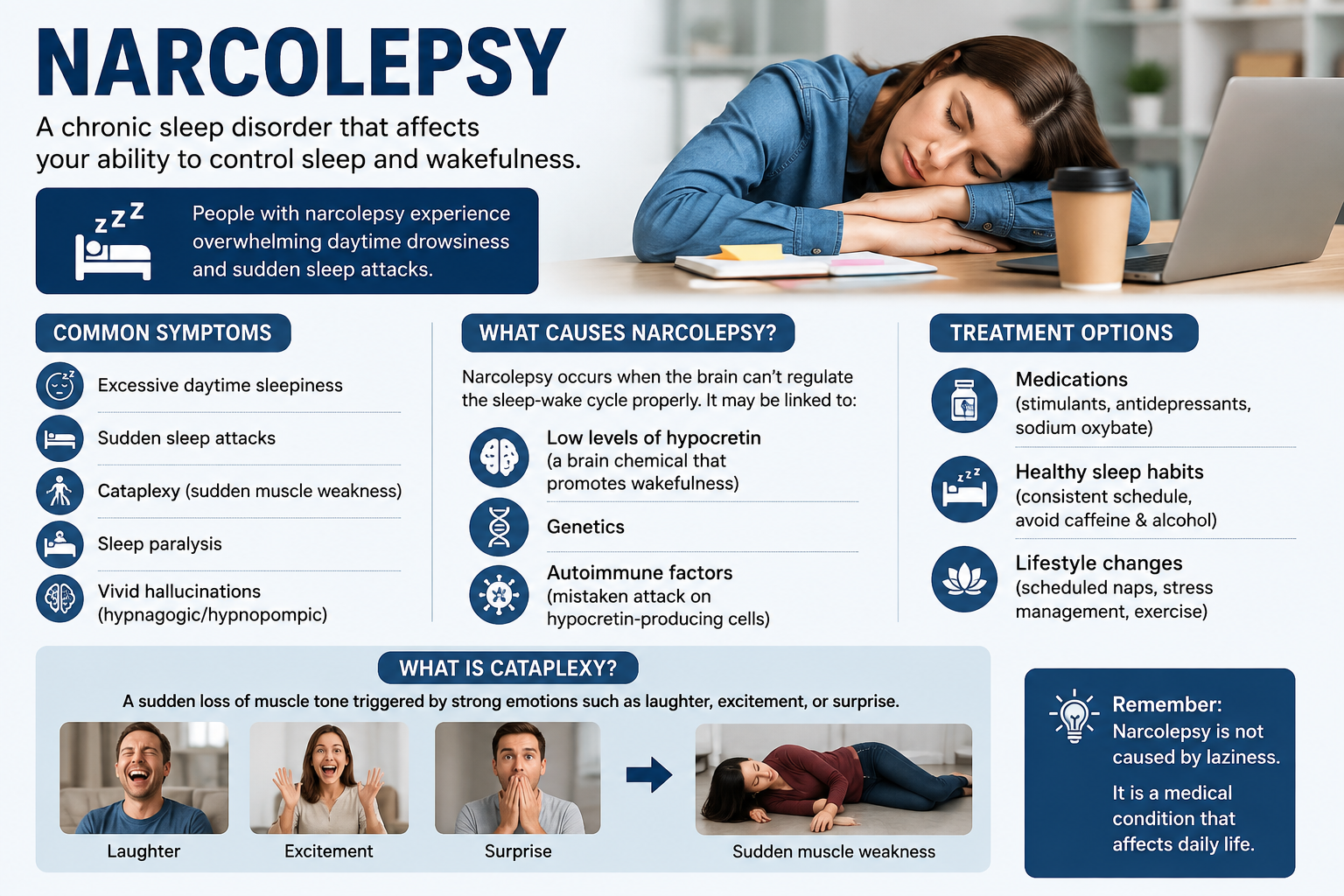
What Is Narcolepsy?
Narcolepsy is a long-term neurological sleep disorder that affects the brain’s ability to control the normal sleep-wake cycle. People with narcolepsy may feel extremely sleepy during the day, even when they’ve had enough time to sleep at night. In some cases, they may suddenly fall asleep during everyday activities such as talking, eating, reading, studying, or working.
Narcolepsy isn’t simply being tired or not getting enough sleep. It is a real medical condition that can affect concentration, memory, work, school, relationships, and safety. The symptoms can be frustrating, especially when other people misunderstand them. Someone with narcolepsy may be wrongly described as lazy, careless, or uninterested when the real problem is a neurological disorder affecting their ability to stay awake.
The good news is that narcolepsy can often be managed. Although there is currently no cure, a combination of medical treatment, healthy sleep habits, planned naps, safety measures, and support can help many people lead active and meaningful lives.
Quick Facts About Narcolepsy
| Topic | Key Information |
|---|---|
| Condition | Chronic neurological sleep disorder |
| Main feature | Excessive daytime sleepiness |
| Sudden sleep episodes | Can occur in some everyday situations |
| Cataplexy | Sudden temporary loss of muscle control, mainly associated with Type One |
| Sleep paralysis | Can occur when falling asleep or waking |
| Hallucinations | May happen around falling asleep or waking |
| Main types | Type One and Type Two |
| Diagnosis | Medical history, sleep evaluation, overnight sleep study, and MSLT may be used |
| Treatment | Medicines, planned naps, sleep habits, and safety strategies |
| Cure | There is currently no cure |
| Outlook | Symptoms can often be controlled with appropriate treatment |
The Main Symptoms of Narcolepsy
The symptoms of narcolepsy can vary from one person to another. Some people have several classic symptoms, while others mainly experience severe daytime sleepiness. Symptoms may develop gradually or appear more noticeably over a shorter period.
Excessive Daytime Sleepiness
Excessive daytime sleepiness is usually one of the most important signs of narcolepsy. A person may feel an overwhelming need to sleep during the day despite spending enough time in bed at night.
This sleepiness can make normal activities surprisingly difficult. Reading a book, sitting through a class, watching television, attending a meeting, or traveling as a passenger may trigger an intense urge to sleep.
In some cases, a person may experience a brief sleep episode and wake feeling refreshed, only to become sleepy again later. This repeated cycle can interfere with everyday responsibilities and quality of life.
Sudden Sleep Episodes
People with narcolepsy may sometimes fall asleep unexpectedly. These episodes can happen during activities that normally require attention.
For example, someone might become sleepy while:
- Studying
- Working at a desk
- Watching television
- Eating a meal
- Having a conversation
- Sitting in a classroom
- Traveling
- Reading
Not every person with narcolepsy experiences sudden sleep in exactly the same way. Some people mainly struggle with persistent sleepiness rather than dramatic sleep attacks. Still, sudden sleep episodes can be one of the most recognizable features of the disorder.
Cataplexy
Cataplexy is a sudden, temporary loss of muscle control. It is strongly associated with Type One narcolepsy.
Interestingly, cataplexy is often triggered by strong emotions. Laughter, excitement, surprise, fear, anger, or stress may cause the muscles to become weak for a short time. A person’s knees might buckle, their head may drop, their face may become weak, or they may have difficulty speaking clearly.
Cataplexy doesn’t mean that a person has suddenly lost consciousness. The person is generally awake and aware during the episode. The severity can vary considerably from mild weakness to a more noticeable collapse.
Sleep Paralysis
Sleep paralysis happens when a person temporarily can’t move while falling asleep or waking up.
It can be frightening. A person may feel awake but unable to move their arms, legs, or body. Sleep paralysis can occur in people who don’t have narcolepsy too, so experiencing it by itself doesn’t mean someone has narcolepsy.
When it occurs alongside excessive daytime sleepiness and other characteristic symptoms, however, it may be an important part of the overall clinical picture.
Vivid Hallucinations
Some people with narcolepsy experience vivid dream-like experiences when falling asleep or waking up. These experiences can involve sights, sounds, sensations, or other perceptions that feel extremely real.
Because they happen around the transition between sleep and wakefulness, they can be confusing or frightening. They shouldn’t automatically be assumed to indicate a psychiatric disorder. A doctor considers these experiences together with the person’s other sleep symptoms.
Poor Nighttime Sleep
It may seem surprising, but people with narcolepsy aren’t necessarily good sleepers at night.
Some people wake frequently or have disrupted nighttime sleep. Therefore, the condition can involve both excessive sleepiness during the day and difficulty maintaining normal, restful sleep at night.
This is one reason why simply telling someone with narcolepsy to “sleep more” isn’t always an adequate solution. The underlying sleep-wake regulation problem needs proper medical assessment.
What Causes Narcolepsy?
The exact cause of narcolepsy isn’t completely understood. Researchers believe that several factors may be involved, including genetics, immune-system activity, and changes in brain chemicals that regulate wakefulness.
One important chemical is called hypocretin, also known as orexin. It helps regulate wakefulness and the sleep-wake cycle.
Many people with Type One narcolepsy have very low levels of hypocretin because the brain cells responsible for producing it have been lost or damaged. Research suggests that an abnormal immune response may play a role in this process, although scientists are still studying exactly what triggers it.
Genetics may also influence risk. Researchers have identified genetic links associated with narcolepsy, including the HLA-DQB1 gene variant. However, having a genetic marker doesn’t mean that a person will definitely develop narcolepsy. Environmental factors may also contribute.
In other words, narcolepsy usually isn’t caused by one simple thing. It’s better understood as a complex disorder involving the brain, sleep regulation, genetics, and possibly the immune system.
Types of Narcolepsy
Doctors generally divide narcolepsy into two main types.
Type One Narcolepsy
Type One narcolepsy is associated with excessive daytime sleepiness and cataplexy. Low levels of hypocretin are also commonly found.
Cataplexy is an important feature because it helps doctors distinguish Type One from Type Two in many cases.
Type Two Narcolepsy
Type Two narcolepsy involves excessive daytime sleepiness without cataplexy.
People with Type Two may still experience other symptoms associated with abnormal sleep, but they don’t have the characteristic emotion-triggered muscle weakness seen in Type One. Hypocretin levels are generally not as low as they are in Type One.
The distinction matters because the symptoms and test results help sleep specialists determine the most appropriate diagnosis and treatment plan.
How Is Narcolepsy Diagnosed?
Diagnosing narcolepsy can take time because several other conditions can cause daytime sleepiness. Sleep apnea, certain medicines, depression, epilepsy, thyroid problems, and other sleep disorders may produce similar symptoms.
A healthcare professional will usually begin by asking about:
- Daytime sleepiness
- Nighttime sleep patterns
- Sudden sleep episodes
- Cataplexy
- Sleep paralysis
- Dream-like experiences
- Medicines and substances
- Family history
- Other health conditions
Keeping a sleep diary can also be useful. It allows a doctor to see patterns in bedtime, wake time, naps, sleepiness, and other symptoms.
Overnight Sleep Study
An overnight sleep study, also called a polysomnogram, can monitor different body functions during sleep.
Depending on the test, doctors may monitor brain activity, eye movements, breathing, heart activity, and muscle activity. The study can help identify other sleep disorders and provide information about the person’s sleep pattern.
Multiple Sleep Latency Test
A Multiple Sleep Latency Test, often called an MSLT, measures how quickly a person falls asleep during scheduled daytime nap opportunities.
People with narcolepsy may fall asleep unusually quickly and enter REM sleep unusually soon. The test is generally performed after an overnight sleep study and interpreted by a qualified sleep specialist.
Hypocretin Testing
In selected cases, doctors may test hypocretin levels in cerebrospinal fluid. This requires a lumbar puncture, sometimes called a spinal tap.
Low hypocretin levels can provide important evidence, particularly when Type One narcolepsy is suspected. However, this test isn’t necessary for every person.
Treatment Options for Narcolepsy
There is currently no cure for narcolepsy, but treatment can significantly improve symptom control. Treatment is usually personalized because different people have different symptoms and medical needs.
A treatment plan may include medicines, scheduled naps, regular sleep habits, safety measures, and treatment of other sleep problems.
Medicines for Daytime Sleepiness
Doctors may prescribe medicines that promote wakefulness or stimulate the central nervous system.
Depending on the individual situation, options may include medicines such as modafinil, armodafinil, solriamfetol, pitolisant, methylphenidate, or certain stimulant medicines. The appropriate medicine depends on factors such as symptoms, other health conditions, side effects, and interactions with other medicines.
These medicines should only be used under professional medical guidance. A medication that works well for one person may not be suitable for another.
Treatment for Cataplexy
Some medicines can reduce cataplexy and other symptoms such as sleep paralysis or hallucinations. Antidepressant medicines may be used in some treatment plans, while oxybate medicines may help with cataplexy and excessive daytime sleepiness.
Because these medicines can have important side effects or interactions, patients shouldn’t start, stop, or change them without talking with their healthcare professional.
Lifestyle Strategies That Can Help
Medicine is only one part of managing narcolepsy. Everyday habits can also make a meaningful difference.
Keep a Consistent Sleep Schedule
Going to bed and waking up at approximately the same time every day can support a more stable sleep routine.
A regular schedule may be especially helpful because narcolepsy affects the normal balance between sleep and wakefulness.
Plan Short Daytime Naps
Scheduled naps may help reduce unexpected sleep episodes and improve alertness during important parts of the day.
Rather than waiting until overwhelming sleepiness arrives, some people benefit from planning naps around the times they are most likely to become sleepy. A healthcare professional can help determine an appropriate schedule.
Create a Sleep-Friendly Bedroom
A dark, comfortable, quiet sleeping environment may support better nighttime sleep.
Helpful habits can include:
- Keeping the bedroom comfortable
- Following a regular bedtime
- Limiting activities that interfere with sleep
- Using relaxing bedtime routines
- Avoiding heavy meals close to bedtime
- Discussing caffeine and alcohol use with a healthcare professional
Good sleep habits don’t cure narcolepsy, but they can support the overall treatment plan.
Exercise Regularly
Regular physical activity can support general health and healthy sleep patterns. However, people with severe daytime sleepiness should consider safety when exercising, particularly around water, roads, heights, or machinery.
The goal isn’t to push through dangerous sleepiness. Rather, it’s to build healthy activity into a safe daily routine.
Safety and Everyday Life With Narcolepsy
Narcolepsy can affect more than sleep. It may influence education, employment, social activities, travel, and personal safety.
Driving is an especially important concern. Falling asleep while driving can cause serious injury or death. People with uncontrolled daytime sleepiness or cataplexy should discuss driving safety with their healthcare provider and follow the laws and medical recommendations applicable to their location.
Other safety steps may include:
- Taking planned naps when appropriate
- Avoiding dangerous activities during periods of severe sleepiness
- Using caution around machinery
- Informing trusted people about the condition
- Creating an emergency plan when appropriate
- Following prescribed treatment
- Attending regular medical appointments
These steps aren’t meant to restrict someone’s life unnecessarily. Instead, they’re designed to help people participate in daily activities as safely as possible.
Narcolepsy in Children and Teenagers
Narcolepsy can begin during childhood or adolescence. However, the symptoms may sometimes be misunderstood.
A student who constantly struggles to stay awake may be considered lazy or unmotivated. Another student may have trouble concentrating because of severe daytime sleepiness rather than a lack of interest in school.
Parents, teachers, and healthcare professionals should pay attention when a young person repeatedly experiences unusual daytime sleepiness, sudden sleep episodes, cataplexy, or other symptoms associated with narcolepsy.
Early recognition can help families seek appropriate medical evaluation and educational support.
Emotional and Social Effects of Narcolepsy
Living with narcolepsy can be emotionally challenging. Imagine trying to explain to friends or coworkers that you aren’t simply tired—you have a neurological sleep disorder that can make staying awake genuinely difficult.
Misunderstanding from others can lead to embarrassment, frustration, anxiety, or social withdrawal. Cataplexy can be especially difficult because emotional situations may trigger symptoms.
Support matters. Family members, teachers, employers, and friends can learn about narcolepsy and understand that the condition isn’t a sign of laziness or poor character.
Professional counseling may also be helpful when someone is struggling emotionally with a chronic condition.
Common Myths About Narcolepsy
Myth: Narcolepsy Means Someone Is Always Asleep
Not true. People with narcolepsy may spend much of the day awake but experience severe sleepiness and sudden urges to sleep.
Myth: Everyone With Narcolepsy Has Cataplexy
No. Cataplexy is strongly associated with Type One narcolepsy, while Type Two doesn’t include cataplexy as a defining feature.
Myth: Narcolepsy Is Just Being Tired
Ordinary tiredness and narcolepsy aren’t the same. Narcolepsy involves abnormal regulation of sleep and wakefulness and can cause severe daytime sleepiness.
Myth: More Sleep Will Always Fix It
Getting adequate sleep is important, but narcolepsy is a neurological condition. Simply sleeping longer doesn’t necessarily correct the underlying problem.
Myth: Someone With Narcolepsy Can’t Have a Normal Life
This is also incorrect. Narcolepsy is lifelong, but symptoms can often be managed through medical treatment, lifestyle strategies, planning, and support.
When Should You See a Doctor?
Persistent or severe daytime sleepiness deserves medical attention, particularly if it affects work, school, driving, relationships, or safety.
Consider speaking with a healthcare professional if you regularly:
- Feel overwhelmingly sleepy during the day
- Fall asleep unintentionally
- Experience sudden muscle weakness during strong emotions
- Have repeated sleep paralysis
- Experience vivid dream-like events when falling asleep or waking
- Wake frequently during the night
- Struggle to stay awake during important activities
A doctor may refer you to a sleep specialist for further testing.
Don’t try to diagnose yourself based on one symptom. Several health conditions can cause excessive daytime sleepiness, so proper evaluation is important.
How Narcolepsy Can Be Managed Long Term
Narcolepsy is generally a lifelong condition, but lifelong doesn’t mean hopeless.
A successful management plan may change over time. Symptoms can vary, medicines may need adjustment, and a person’s work or school schedule may change. Regular communication with healthcare professionals can help keep treatment appropriate.
A useful long-term plan may include:
- Following prescribed medicines correctly
- Maintaining consistent sleep and wake times
- Planning daytime naps
- Monitoring symptoms
- Protecting nighttime sleep
- Treating other sleep disorders
- Taking safety precautions
- Seeking emotional support when needed
- Keeping healthcare providers informed about changes
According to medical guidance, treating other sleep disorders can also improve symptoms and overall sleep health.
Research and the Future of Narcolepsy Treatment
Scientists continue to study the biology behind narcolepsy, particularly the role of hypocretin or orexin-producing brain cells, genetics, immune-system activity, and sleep regulation.
Understanding why these brain cells are lost in many people with Type One narcolepsy could eventually lead to more targeted treatments. Current research also continues to explore better ways to control daytime sleepiness, cataplexy, nighttime sleep disruption, and other symptoms.
While a cure isn’t currently available, medical progress has already provided several ways to manage the disorder. Continued research offers reason for optimism.
Frequently Asked Questions About Narcolepsy
Is narcolepsy a neurological disorder?
Yes. Narcolepsy is a chronic neurological disorder that affects the brain’s regulation of sleep and wakefulness.
Can narcolepsy be cured?
There is currently no cure, but treatments can help control symptoms and improve daily functioning.
What is the main symptom of narcolepsy?
Excessive daytime sleepiness is one of the main and usually earliest symptoms. Some people also experience sudden sleep episodes, cataplexy, sleep paralysis, hallucinations, and disrupted nighttime sleep.
Is cataplexy the same as fainting?
No. Cataplexy is a temporary loss of muscle control, often triggered by strong emotions, while the person generally remains conscious.
Can people with narcolepsy drive?
Driving safety depends on the person’s symptoms, treatment response, and local laws. Because uncontrolled sleepiness can make driving dangerous, anyone with narcolepsy should discuss driving with their healthcare professional.
Can children have narcolepsy?
Yes. Narcolepsy can begin in younger people, including children and teenagers, although symptoms may sometimes be overlooked or mistaken for other problems.
How is narcolepsy tested?
Doctors may use a medical and sleep history, physical examination, overnight polysomnography, a Multiple Sleep Latency Test, and, in selected cases, hypocretin testing.
Is narcolepsy caused by being lazy?
Absolutely not. Narcolepsy is a medical neurological condition. Severe daytime sleepiness can make a person appear inattentive or unmotivated, but that doesn’t mean they lack effort.
Final Thoughts on Narcolepsy
Narcolepsy is much more than occasional tiredness. It’s a chronic neurological sleep disorder that can interfere with the brain’s normal control of sleep and wakefulness. Excessive daytime sleepiness is the central symptom, while some people also experience cataplexy, sleep paralysis, vivid hallucinations, sudden sleep episodes, and disrupted nighttime sleep.
Getting the correct diagnosis is important because other conditions can cause similar symptoms. Medical professionals may use sleep studies and specialized tests to understand what is happening and to rule out other causes.
Although there is no current cure, narcolepsy can often be managed with an individualized combination of medicines, scheduled naps, healthy sleep habits, safety planning, and ongoing medical care. With proper support and treatment, people living with narcolepsy can work toward a productive, active, and fulfilling life.
Never miss a headline follow All News Here for fresh news, updates & insights every day.