
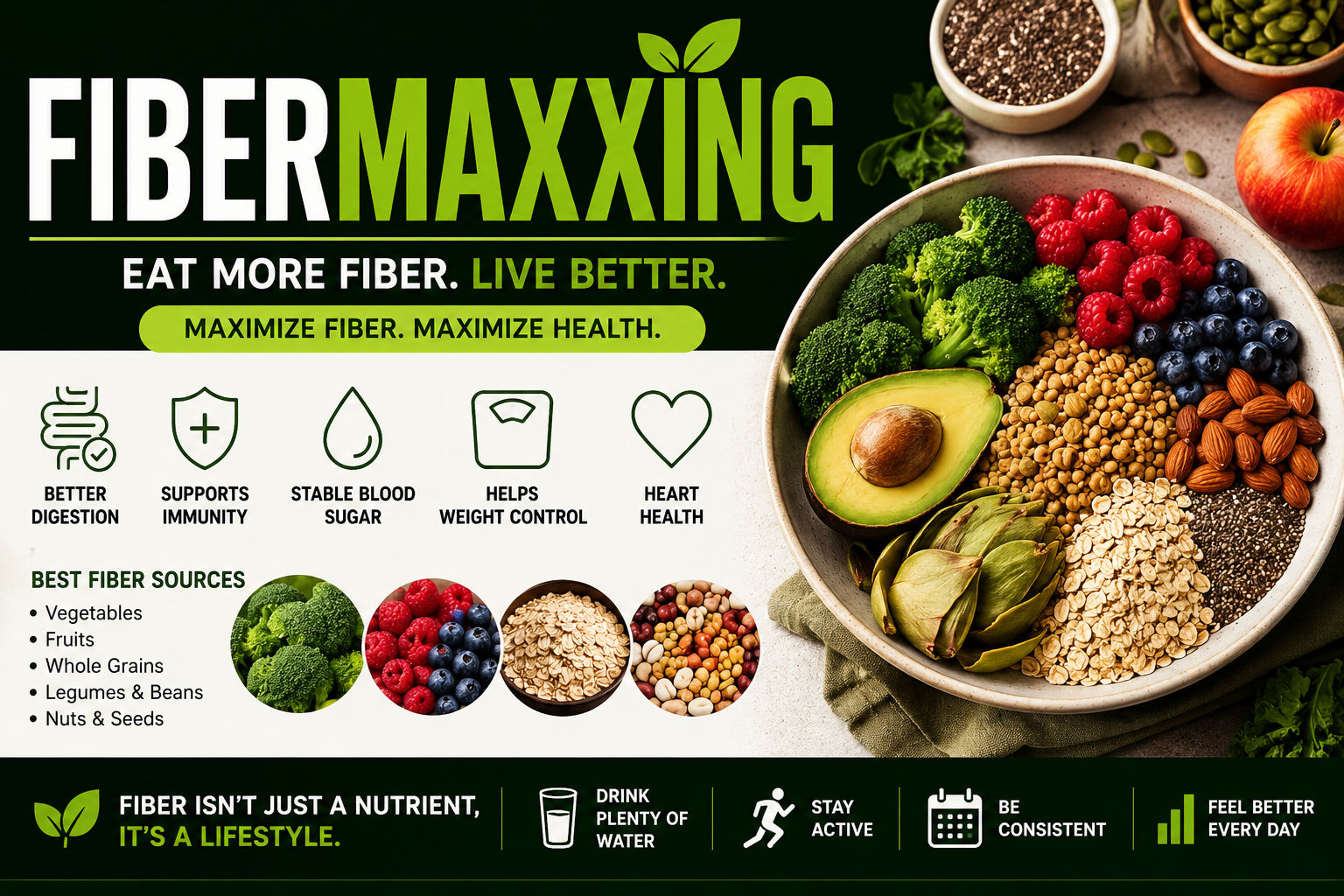
Fibermaxxing is a growing nutrition trend that focuses on increasing the amount of dietary fiber in your everyday meals. Instead of relying on highly processed foods, fibermaxxing encourages people to eat more fruits, vegetables, beans, whole grains, nuts, and seeds.
Fiber is an important part of a healthy diet, yet many people don’t eat enough of it. A high-fiber eating pattern can support regular bowel movements, improve fullness after meals, and help create a more balanced diet. The key, however, is to increase fiber gradually rather than suddenly eating very large amounts.
The good news is that fibermaxxing doesn’t have to mean following a strict diet or eating unusual foods. In fact, it can be as simple as adding berries to breakfast, choosing whole grains, eating beans with lunch, or including more vegetables with dinner.
This guide explains what fibermaxxing means, why fiber matters, the best high-fiber foods, possible benefits, common mistakes, and practical ways to make fibermaxxing part of a balanced lifestyle.
What Is Fibermaxxing?
Fibermaxxing is an informal term used to describe a deliberate effort to eat more dietary fiber. The idea has become popular through online health and nutrition discussions, where people share meals and food combinations designed to increase daily fiber intake.
Unlike a strict diet plan, fibermaxxing doesn’t require a specific menu. There isn’t one official fibermaxxing meal plan that everyone must follow. Instead, the basic idea is to make high-fiber foods a regular part of your meals.
Dietary fiber is a type of carbohydrate that the body doesn’t fully digest. It moves through the digestive system and can support healthy digestion and bowel regularity.
Fiber is found naturally in plant foods such as:
- Beans and lentils
- Fruits
- Vegetables
- Whole grains
- Nuts
- Seeds
- Peas
- Berries
- Oats
- Potatoes and other plant foods
For adults, the National Institute of Diabetes and Digestive and Kidney Diseases notes that general daily fiber needs are commonly around 22 to 34 grams, depending on age and sex. Individual needs can vary.
So, fibermaxxing isn’t really about eating as much fiber as possible. It’s about making sure your diet contains an appropriate amount of fiber from nutritious foods.
Why Is Fibermaxxing Becoming Popular?
Fibermaxxing has gained attention because fiber is connected to several basic parts of healthy eating. People are increasingly interested in gut health, balanced meals, whole foods, and better digestion.
Social media has also made the idea easier to discover. A simple bowl of oats, berries, chia seeds, and nuts can suddenly become a popular high-fiber breakfast idea. Likewise, bean salads, lentil bowls, vegetable soups, and whole-grain meals are often shared as practical ways to increase fiber.
But here’s the important point: popularity doesn’t automatically make every online fibermaxxing claim accurate.
Some social media posts may suggest that extremely high fiber intake is always better. That’s not necessarily true. A person’s digestive system needs time to adapt, and suddenly increasing fiber can cause gas, bloating, cramps, or changes in bowel habits.
A better approach is steady and sensible fibermaxxing.
Rather than chasing the biggest possible fiber number, focus on food quality, variety, hydration, and overall nutrition.
Understanding Soluble and Insoluble Fiber
Fiber is often discussed as though it were one single substance. However, different types of fiber can behave differently in the body.
Two commonly discussed categories are soluble and insoluble fiber.
Soluble fiber can dissolve in water and form a gel-like material in the digestive tract. It is found in foods such as oats, beans, peas, apples, and some other fruits and vegetables.
Insoluble fiber doesn’t dissolve in water. It adds bulk to stool and helps food move through the digestive system. Whole grains, vegetables, nuts, and some fruit skins provide insoluble fiber.
Many foods contain a mixture of different types of fiber, so you don’t need to carefully calculate every type.
A varied diet is usually the simplest approach.
| Fiber Type | Common Food Sources | General Role |
|---|---|---|
| Soluble fiber | Oats, beans, peas, apples | Can support digestive and metabolic health |
| Insoluble fiber | Whole grains, vegetables, nuts | Adds bulk and supports bowel regularity |
| Fermentable fibers | Beans, onions, garlic, some grains | Can be used by gut microorganisms |
| Naturally occurring plant fiber | Fruits, vegetables, legumes | Helps build a fiber-rich eating pattern |
The FDA notes that certain dietary fibers can have beneficial physiological effects, including effects related to bowel regularity, blood glucose, cholesterol, and calorie intake.
Fibermaxxing and Digestive Health
One of the main reasons people become interested in fibermaxxing is digestive health.
Fiber can help support regular bowel movements. It can also make stool softer and easier to pass when combined with enough fluid. The NIDDK recommends increasing fiber gradually and drinking plenty of liquids because fluids help fiber work effectively.
For people who currently eat very little fiber, this gradual approach matters.
Imagine someone who normally eats mostly refined grains, processed snacks, and low-fiber meals. If that person suddenly adds large amounts of beans, bran, seeds, and raw vegetables in one day, the digestive system may not be thrilled.
The result could be:
- Gas
- Bloating
- Abdominal discomfort
- Changes in bowel movements
- Feeling overly full
That’s why slow and steady wins the race.
Adding one high-fiber food at a time can give the digestive system a chance to adjust.
Fibermaxxing should support digestion, not turn every meal into a challenge for your stomach.
The Best Foods for Fibermaxxing
One of the easiest ways to practice fibermaxxing is to focus on foods that naturally contain fiber.
Beans and Lentils
Beans and lentils are among the most useful foods for a high-fiber eating pattern. They can be added to soups, salads, rice dishes, wraps, and stews.
Good choices include:
- Lentils
- Chickpeas
- Black beans
- Kidney beans
- Soybeans
- Peas
They also provide other nutrients, including plant-based protein, which makes them useful in balanced meals.
Fruits
Fruit provides fiber along with vitamins, minerals, water, and naturally occurring sugars.
Good choices include:
- Apples
- Pears
- Oranges
- Raspberries
- Blackberries
- Strawberries
- Bananas
- Kiwi
Whenever appropriate, eating whole fruit instead of drinking only fruit juice can provide more fiber.
Vegetables
Vegetables can make fibermaxxing colorful, filling, and enjoyable.
Try:
- Broccoli
- Carrots
- Green peas
- Brussels sprouts
- Sweet potatoes
- Spinach
- Cauliflower
- Green beans
You don’t need to eat a giant bowl of vegetables at every meal. Adding even one extra serving can be a useful step.
Whole Grains
Replacing refined grains with whole-grain choices is another simple strategy.
Examples include:
- Oatmeal
- Whole-wheat bread
- Brown rice
- Barley
- Whole-grain pasta
- Bran cereals
- Bulgur
- Whole-grain tortillas
Whole grains can be especially convenient because they can replace foods you’re already eating.
Nuts and Seeds
Nuts and seeds can add fiber, texture, and healthy fats to meals.
Popular options include:
- Almonds
- Peanuts
- Pistachios
- Chia seeds
- Flaxseeds
- Pumpkin seeds
- Sunflower seeds
Sprinkling seeds over oatmeal or yogurt is a small change that can make breakfast more interesting and fiber-rich.
How to Start Fibermaxxing Without Overdoing It
The biggest mistake beginners make is trying to increase fiber too quickly.
Fibermaxxing works better as a gradual lifestyle change.
Start by looking at what you already eat. If your breakfast is low in fiber, improve breakfast first. If lunch contains few vegetables, add a salad or vegetable side.
A simple progression could look like this:
- Add fruit to breakfast.
- Choose whole-grain bread.
- Add beans to lunch or dinner.
- Include vegetables with your main meal.
- Snack on fruit or a small portion of nuts.
- Try oats or another whole grain.
- Increase variety over time.
You don’t need to transform your entire diet overnight.
Your goal is to build habits that you can continue for months and years.
Fibermaxxing Meal Ideas for Everyday Life
A high-fiber diet doesn’t have to be boring. With a little creativity, everyday foods can become satisfying fiber-rich meals.
Breakfast Ideas
Try oatmeal topped with berries, chia seeds, and nuts.
Another option is whole-grain toast with avocado and a side of fruit.
You could also prepare plain yogurt with fruit, oats, and seeds.
Lunch Ideas
A bean and vegetable bowl can provide fiber and plant-based protein. Add brown rice or another whole grain for a more complete meal.
A chickpea salad with vegetables and whole-grain bread is another practical option.
Dinner Ideas
Consider lentil soup with vegetables and whole-grain bread.
You could also prepare roasted vegetables with beans and brown rice.
A vegetable and chickpea curry can be another flavorful choice.
Snack Ideas
Simple snacks can also support fibermaxxing.
Consider:
- An apple with nuts
- Berries with yogurt
- A pear
- Carrots with hummus
- A small serving of nuts
- Fruit with a spoonful of seeds
The goal isn’t perfection. It’s consistency.
Fibermaxxing and Feeling Full
Fiber-rich foods can help meals feel more satisfying.
Many high-fiber foods take longer to chew and can add bulk to a meal. This may help some people feel fuller after eating.
For example, compare a meal made mostly from refined carbohydrates with one that includes vegetables, beans, whole grains, and a source of protein. The second meal may offer a broader combination of nutrients and may feel more substantial.
This doesn’t mean fiber is a magic weight-loss ingredient.
Body weight is influenced by many factors, including total energy intake, physical activity, sleep, genetics, medications, and overall eating patterns.
Still, choosing fiber-rich foods can be a practical way to build more balanced meals.
The FDA recognizes that certain dietary fibers can contribute to reduced calorie intake and other beneficial physiological effects.
Fibermaxxing and the Gut Microbiome
The gut microbiome refers to the huge community of microorganisms living in the digestive tract.
Certain types of dietary fiber can be used by gut microorganisms. This is one reason researchers and nutrition experts are interested in the relationship between fiber and gut health.
Different fibers can interact with the gut in different ways. That makes food variety especially useful.
Instead of eating one high-fiber food every day, try rotating different sources.
For example:
- Oats one morning
- Berries another day
- Lentils at lunch
- Beans at dinner
- Nuts as a snack
- Vegetables throughout the week
This approach gives your diet greater variety.
Fibermaxxing is therefore better understood as a broad eating pattern than a competition to find one “superfood.”
Why Hydration Matters During Fibermaxxing
Water and other suitable fluids become especially important when you increase fiber.
Fiber interacts with water in the digestive system. Drinking enough fluid can help fiber work more effectively, particularly when increasing fiber intake. NIDDK specifically recommends drinking plenty of liquids when eating more fiber.
However, hydration needs aren’t identical for everyone.
Your fluid requirements can depend on:
- Activity level
- Climate
- Body size
- Diet
- Health conditions
- Medications
A person exercising outdoors in hot weather may need more fluid than someone spending most of the day indoors.
So, when practicing fibermaxxing, don’t focus only on food. Pay attention to hydration too.
Common Fibermaxxing Mistakes to Avoid
Fibermaxxing can be helpful, but more isn’t automatically better.
Increasing Fiber Too Fast
Suddenly eating huge amounts of fiber may cause digestive discomfort.
Increase intake gradually instead.
Forgetting Water
A high-fiber diet without enough fluids can be uncomfortable for some people.
Make hydration part of your routine.
Relying Only on Supplements
Fiber supplements can be useful in certain situations, but whole foods provide many other nutrients too.
Whenever possible, build your fiber intake around fruits, vegetables, legumes, whole grains, nuts, and seeds.
Eating Only One Type of Fiber
Don’t build your entire diet around one food.
Variety is a better strategy.
Ignoring Your Body
If a particular food causes discomfort, don’t force yourself to eat large quantities simply because it’s popular online.
Nutrition isn’t one-size-fits-all.
Treating Fibermaxxing as a Weight-Loss Shortcut
Fiber is important, but it isn’t a magic solution for losing weight.
Healthy eating involves the entire dietary pattern.
Fibermaxxing With a Balanced Diet
A smart fibermaxxing plan shouldn’t eliminate protein, healthy fats, or other important nutrients.
Instead, fiber-rich foods should become part of balanced meals.
A simple meal formula could include:
Fiber-rich carbohydrate + protein + vegetables or fruit + healthy fat
For example, you could combine:
- Brown rice + beans + vegetables + avocado
- Oats + yogurt + berries + nuts
- Whole-grain bread + eggs + vegetables + fruit
- Lentils + vegetables + whole grains + olive oil
This approach is much more sustainable than eating fiber-rich foods while ignoring the rest of your nutritional needs.
Fibermaxxing should add quality to your diet, not make it unnecessarily restrictive.
Fibermaxxing for People With Digestive Sensitivities
Some people may experience more digestive symptoms when increasing fiber. This can happen for several reasons, and the best approach depends on the individual.
Certain people may tolerate one type of fiber better than another. For example, NIDDK notes that soluble fiber may be more helpful for some people with irritable bowel syndrome, while dietary changes can vary from person to person.
If you have ongoing digestive symptoms, don’t assume that simply eating more and more fiber is the answer.
It may be better to discuss your diet with a doctor or registered dietitian.
This is especially important if you experience persistent abdominal pain, unexplained changes in bowel habits, blood in your stool, or ongoing constipation.
Fibermaxxing should always fit the needs of the individual.
How to Read Food Labels for Fibermaxxing
Food labels can make fibermaxxing easier.
When shopping, check the Nutrition Facts label for dietary fiber. Comparing similar products can help you identify options that provide more fiber.
For example, if you’re choosing between two breads, compare their fiber content per serving.
You can use the same approach with:
- Breakfast cereals
- Crackers
- Pasta
- Tortillas
- Snack bars
- Frozen meals
However, don’t judge a food only by its fiber number.
Also consider:
- Added sugars
- Saturated fat
- Sodium
- Protein
- Ingredient quality
- Serving size
- Overall nutritional value
The FDA recognizes dietary fiber on Nutrition Facts labels and defines dietary fiber in terms of non-digestible carbohydrates and lignin that meet specified criteria.
A Simple Fibermaxxing Daily Plan
You don’t need complicated recipes to build a fiber-rich day.
Here is an example framework:
| Meal | Simple Fibermaxxing Idea |
|---|---|
| Breakfast | Oatmeal with berries, seeds, and nuts |
| Morning snack | Apple or pear |
| Lunch | Bean bowl with vegetables and brown rice |
| Afternoon snack | Carrots with hummus |
| Dinner | Lentil or bean dish with vegetables and whole grains |
| Drinks | Water and other suitable fluids throughout the day |
This is only an example, not a medical diet plan.
Portion sizes and food choices should match your personal energy needs, preferences, allergies, culture, budget, and health requirements.
Is Fibermaxxing Safe for Everyone?
For most healthy people, eating fiber-rich foods as part of a balanced diet is a sensible nutritional goal. However, individual needs differ.
People with certain digestive conditions, swallowing problems, bowel disorders, or other health concerns may need specific dietary advice.
If you have a medical condition or take medications, it’s wise to ask a healthcare professional before making major dietary changes.
Also, don’t assume that a food trend on social media is medically appropriate for everyone.
A registered dietitian can help you create a personalized eating plan if you need more specific guidance.
And remember, fibermaxxing should never replace medical care.
Fibermaxxing on a Budget
Eating more fiber doesn’t have to be expensive.
Some of the most useful fiber-rich foods are affordable and widely available.
Budget-friendly options include:
- Oats
- Lentils
- Dried or canned beans
- Chickpeas
- Seasonal vegetables
- Bananas
- Apples
- Potatoes
- Brown rice
- Whole-grain cereals
- Peanuts
Buying seasonal produce can also help lower food costs.
Dried beans and lentils can be especially economical. If using canned beans, checking the label and choosing lower-sodium options when available can be useful.
In other words, fibermaxxing doesn’t require a basket full of expensive health products.
Simple foods can do the job remarkably well.
Fibermaxxing Doesn’t Mean Eating Perfectly
One of the most important lessons about fibermaxxing is that you don’t need to be perfect.
Maybe you eat a high-fiber breakfast but have a less balanced lunch. That’s okay.
Maybe you eat vegetables every day but don’t enjoy chia seeds. No problem.
Maybe beans aren’t part of your usual meals. You can use oats, fruit, vegetables, whole grains, nuts, and seeds instead.
A healthy eating pattern is built over time.
The most useful habits are often the ones that are simple enough to repeat.
Rather than asking, “How can I eat the maximum amount of fiber?”
Ask:
“How can I naturally include more fiber in meals I already enjoy?”
That small change in thinking can make fibermaxxing more realistic.
Fibermaxxing: Quality Matters More Than Chasing a Huge Number
The term “maxxing” can make it sound like you need to push something to the extreme.
That’s not the best way to approach nutrition.
Your goal shouldn’t be to eat the highest possible amount of fiber. Your goal should be to reach an appropriate amount through a varied and balanced diet.
A bowl of oats, fruit, and nuts may be more useful than forcing down an enormous amount of one particular fiber product.
Likewise, a balanced bean and vegetable meal may be better than relying heavily on fiber supplements.
Fibermaxxing should be about better food choices, not extreme behavior.
Practical Tips to Make Fibermaxxing a Habit
If you want to make fibermaxxing part of your daily routine, start with small changes.
Try these practical strategies:
- Add one fruit to your breakfast.
- Keep fruit available for snacks.
- Choose whole grains more often.
- Add beans to soups and salads.
- Include vegetables with lunch and dinner.
- Add nuts or seeds to suitable meals.
- Increase fiber gradually.
- Drink enough fluids.
- Try different plant foods instead of eating the same food every day.
- Pay attention to how your body responds.
- Choose mostly whole or minimally processed foods.
- Don’t rely entirely on supplements.
- Keep your meals balanced with protein and healthy fats.
These steps are simple, but they can add up.
Frequently Asked Questions About Fibermaxxing
What does fibermaxxing mean?
Fibermaxxing is an informal term for intentionally increasing dietary fiber intake, usually by eating more fiber-rich plant foods.
Is fibermaxxing a real diet?
Not in the traditional sense. Fibermaxxing isn’t a standardized medical diet with one official meal plan. It’s better described as a nutrition trend or eating strategy focused on increasing fiber.
How much fiber should adults eat?
General guidance cited by NIDDK places adult fiber needs around 22 to 34 grams per day, depending on age and sex. Individual needs may differ.
Can fibermaxxing help with constipation?
Increasing dietary fiber can help prevent or relieve constipation for many people. NIDDK also recommends increasing fiber gradually and drinking plenty of liquids.
Can eating too much fiber cause problems?
Yes. A sudden increase in fiber can cause gas, bloating, or abdominal discomfort. Gradually increasing fiber can make the transition easier.
What are the best foods for fibermaxxing?
Beans, lentils, fruits, vegetables, whole grains, nuts, seeds, peas, and oats are excellent foods to include in a fiber-rich diet.
Is fibermaxxing good for weight loss?
Fiber-rich foods can help make meals more filling, but fibermaxxing shouldn’t be treated as a guaranteed weight-loss method. Sustainable weight management involves the overall diet, physical activity, sleep, and many other factors.
Do I need fiber supplements for fibermaxxing?
Not necessarily. Many people can increase fiber through ordinary foods. Supplements may have a role in some situations, but a healthcare professional can help determine whether one is appropriate.
Should I drink more water when increasing fiber?
Adequate fluid is important when increasing fiber. NIDDK specifically advises drinking plenty of liquids when eating more fiber.
Is fibermaxxing suitable for everyone?
The basic idea of eating more fiber-rich foods can fit many healthy diets, but individual needs vary. People with certain medical or digestive conditions should seek personalized advice before making major dietary changes.
Final Thoughts on Fibermaxxing
Fibermaxxing can be a simple and practical way to improve the quality of your everyday diet. It doesn’t require expensive products, strict rules, or extreme eating habits. Instead, the basic idea is to make fiber-rich foods a more regular part of balanced meals.
Start with foods you already enjoy. Add fruit to breakfast, choose whole grains, eat beans and lentils, include vegetables with meals, and use nuts or seeds when they fit your diet. Increase fiber gradually and drink enough fluids so your digestive system has time to adjust.
Most importantly, don’t turn fibermaxxing into a competition. More isn’t always better. A varied diet that provides an appropriate amount of fiber, protein, healthy fats, vitamins, minerals, and enough energy is a much stronger long-term goal.
When approached sensibly, fibermaxxing can become less of an internet trend and more of a useful reminder: simple plant foods, eaten regularly and in balance, can play an important role in a healthy lifestyle.
Never miss a headline follow All News Here for fresh news, updates & insights every day.